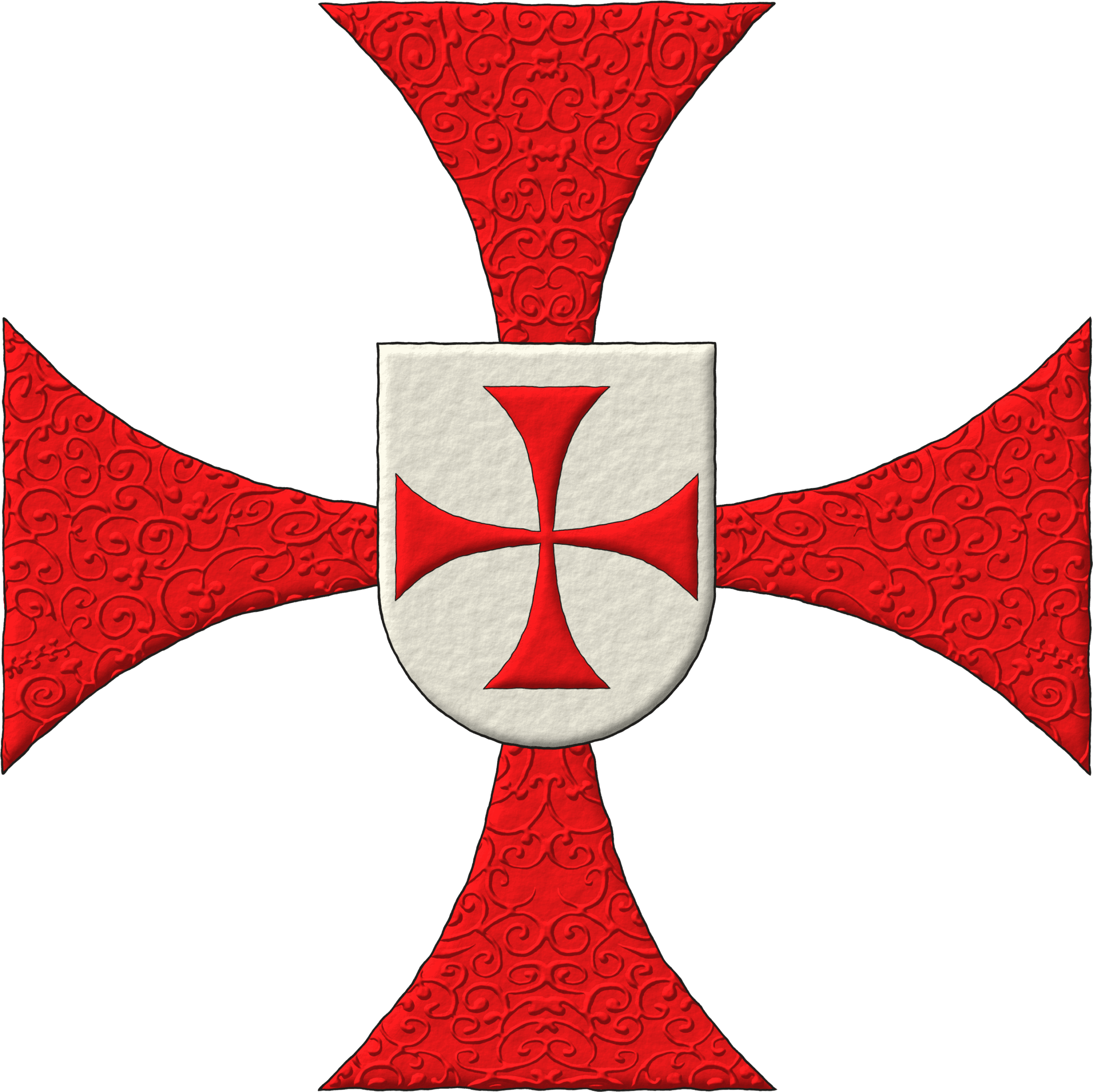
L’ordre du Temple
(est. 1705)
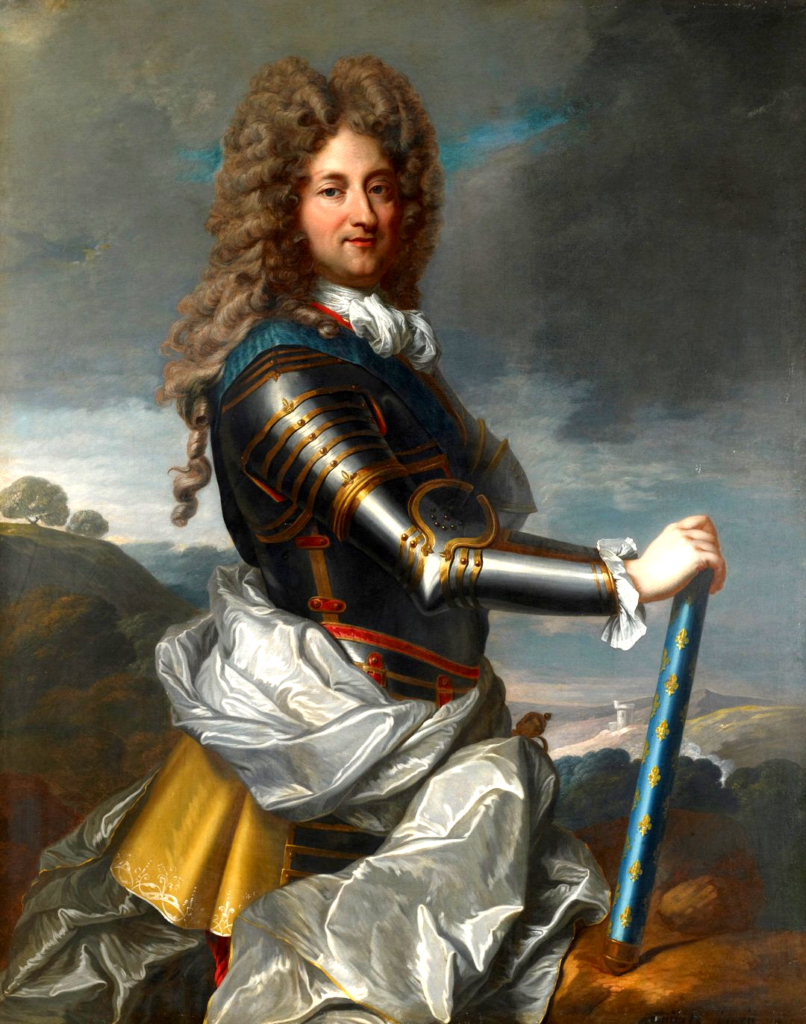
L’ordre du Temple (OT) is an Order of Knights, made public in France in 1705 under Philippe II, Duke of Orléans, the future Regent of France.
At the heart of the Christian faith lies a profound reverence for human life. The Bible consistently emphasizes the sanctity of life and the importance of protecting the vulnerable. In the maritime context, this translates into a moral obligation to ensure the safety and well-being of seafarers, who often face perilous conditions and risks while fulfilling their duties.
The OT’s dedication to maritime security directly reflects this Christian imperative to protect life. By advocating for robust safety measures, promoting effective training programs, and supporting initiatives that mitigate risks at sea, the OT actively contributes to the preservation of human life in the maritime domain. This commitment aligns with the biblical mandate to love one’s neighbor and care for those in need.
Mission
The ancient Templars’ naval operations ensured the safe passage of pilgrims and protected trade routes, making them a significant force in maintaining stability and promoting the region’s economic and religious significance. In line with this history, the modern Order is a fellowship operating an expert group focused on promoting maritime security.
Individual path
We believe that a life guided by these principles extends beyond membership. Just as a single stone strengthens a wall, each individual who embodies these values strengthens the fabric of our communities. We encourage our members to be active citizens, promoting these ideals through their actions and interactions in their workplaces, families, and broader social circles. By collectively striving for a more just, compassionate, and informed world, we can create a lasting impact that transcends generations.
Grand Master
The Grand Priory recognizes Jacques de Molay (1248–1314) as the sole, last Grand Master of the Knights Templar. The Grand Priory makes a moral and ethical claim to follow the same spiritual path as the original Order of the Knights Templar.
Grand Prior
Bar. Dr. rer. nat. h.c. R.A.U. Juchter van Bergen Quast, LLM. The legitimacy of the Grand Prior is historically rooted in his descent from George Home (ca. 1556 – 1611), Baron Hume of Berwick and Earl of Dunbar, and Alexander Hume (1651 – 1720), 5th Earl of Dunbar; ancestors who were ennobled by the Stuart dynasty, thereby mirroring the nobiliary heritage of many original members of the Ordre du Temple
Certificate of recognition as a descendent from George Home, issued by The Rt Revd David Conner, GCVO – The Dean of Windsor, Registrar of the Garter, St. George’s Chapel, Windsor Castle, 16 Aug. 2007, membership no. 8700.
Council
- Vice Admiral (Ret.) Boris Borisovich Kozhin
- Rear Admiral (Ret.) Damiano Capurso
- Master mariner Lars H. Bergqvist
Legacy
The modern Ordre du Temple, operating under a Grand Priory, adheres to the historical precedents of 1705 and 1853. It is distinct from the various OSMTH factions that emerged in the late 20th century: it maintains a historical legitimation rooted in the verifiable Stuart dynastic heritage, and it pursues a specialized professional purpose focused on maritime security expertise rather than general fraternalism. The Grand Priory recognizes Jacques de Molay (1248–1314) as the sole, last Grand Master of the Knights Templar, and makes a moral and ethical claim to follow the same spiritual path as the original Order.
Pre-19th century origins
- Philippe, Duke of Orléans: He was elected Grand Master of the Templar Order at the Convent General at Versailles in 1705. See tables below for more details.
19th century restoration and schisms
- Bernard-Raymond Fabré-Palaprat: He became Grand Master on 2 November 1804.
- Charles Louis David Le Peletier de Rosanbo d’Aunay: He replaced Fabré-Palaprat on 21 January 1813. This occurred after a General Convent demanded Fabré-Palaprat’s resignation on 15 May 1812.
- Claude Antoine Gabriel de Choiseul, Duke of Choiseul: He was elected Grand Master on 1 February 1814 by opponents of Fabré-Palaprat.
- Bernard-Raymond Fabré-Palaprat: He was reinstalled as Grand Master on 19 December 1814.
- Sir William Sidney Smith: He was chosen as Grand Master by a Convent General on 13 January 1838. Fabré-Palaprat also appointed Smith as his successor on his deathbed on 18 February 1838. He served until his death on 26 May 1840.
Rival regents (1838–1840)
During Sir William Sidney Smith’s tenure, French factions refused to recognize his leadership and elected their own regents:
- Jules Guigues de Moreton, Marquis de Chabrillan: French Templars who refused to recognize Sir William Sidney Smith chose him as Regent.
- Charles Fortune Jules Guiges Auney: The “Palapratien Templars” installed him as Regent. They rejected Smith in 1839 because he was a member of the Church of England rather than a Catholic.
Post-1840 reunification and later leaders
After Sir Sidney Smith’s death, the English Grand Priory permanently broke away and elected its own Grand Masters:
- King Edward VII: He served as Grand Master from 1841 to 1910.
- King George: He followed King Edward VII as Grand Master from 1865 to 1936.
Post-1840 reunification and later leaders
- Jean-Marie Raoul: Became Regent after General Convents on 13 January and 18 February 1841 united the factions. He served until his death on 4 February 1850.
- Narcisse René Valleray: Assumed the Regency upon Raoul’s death on 4 February 1850.
- 1866 Dr. A.G.M. Vernois (Regent). On 15 August 1871, Dr Verois deposited the Archives of the Order into the National Archives of France, Paris ABXIX boxes 125/158.
- Joséphin Péladan: French novelist and Rosicrucian. He served as the French Grand Master of the Order in 1892.
- 1894 Reinstatement of the Regency, and the Establishment of an International Secretariat of the Templars, with magisterial powers.
20th century restauration
- 1933 Théodore Covias: Following the dissolution and subsequent reformation of the Order, the National Secretariat in Brussels entrusted the Regency to him on 1 October 1933. The Regency Council formally transferred its powers to him on 7 March 1935. He worked alongside fellow Belgian brothers Joseph Cleeremans and Gustave Jonckbloedt to re-register the organization in Brussels on 19 January 1932.
- 1935-1942 August Emile Clement Joseph Isaac (Vandenberg) (Regent). Vandenburg assumed the Office and Guardian of the Order with all its rights and Privileges. Swiss citizen Anton Leuprecht moves offices and Archives to the safety of Portugal, because of the war.
- 1942-1960 Antonio de Sousa Fontes (Regent).
- 1960-2018 Fernando de Sousa Fontes (Regent).
- 2017- R.A.U. Juchter van Bergen Quast, CEO Swiss Chamber of Commerce in The Netherlands, appointed Grand Prior in Switzerland by F. de Sousa Fontes, later Grand Prior of The Netherlands.
Membership
Membership is by invitation only.
Notable members
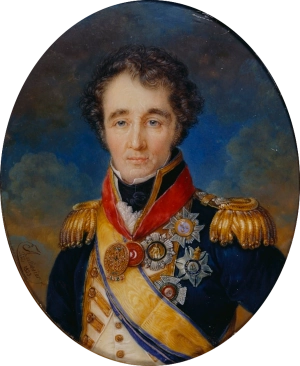
- Admiral Sir William Sidney Smith (1764–1840): the “Hero of Acre,” who received a Templar Cross from the Greek Archbishop and served as Regent of the Order after Fabré-Palaprat.
- Duke of Choiseul-Stainville (1760–1838): Claude-Antoine-Gabriel de Choiseul, Peer of France and aide-de-camp to Louis-Philippe.
- Prince Augustus-Frederick, Duke of Sussex (1773–1843): sixth son of George III and Grand Master of the Premier Grand Lodge of England.
- Charles Tennyson d’Eyncourt (1784–1861): British politician and uncle of Alfred, Lord Tennyson.
- Dom Pedro I (1798–1834): Emperor of Brazil and King of Portugal (as Pedro IV). He accepted the title of First Knight of Honour and authorized his minister to become titular Grand Prior of Brazil.
Supporting the monks of St. Michael’s Abbey, Farnborough
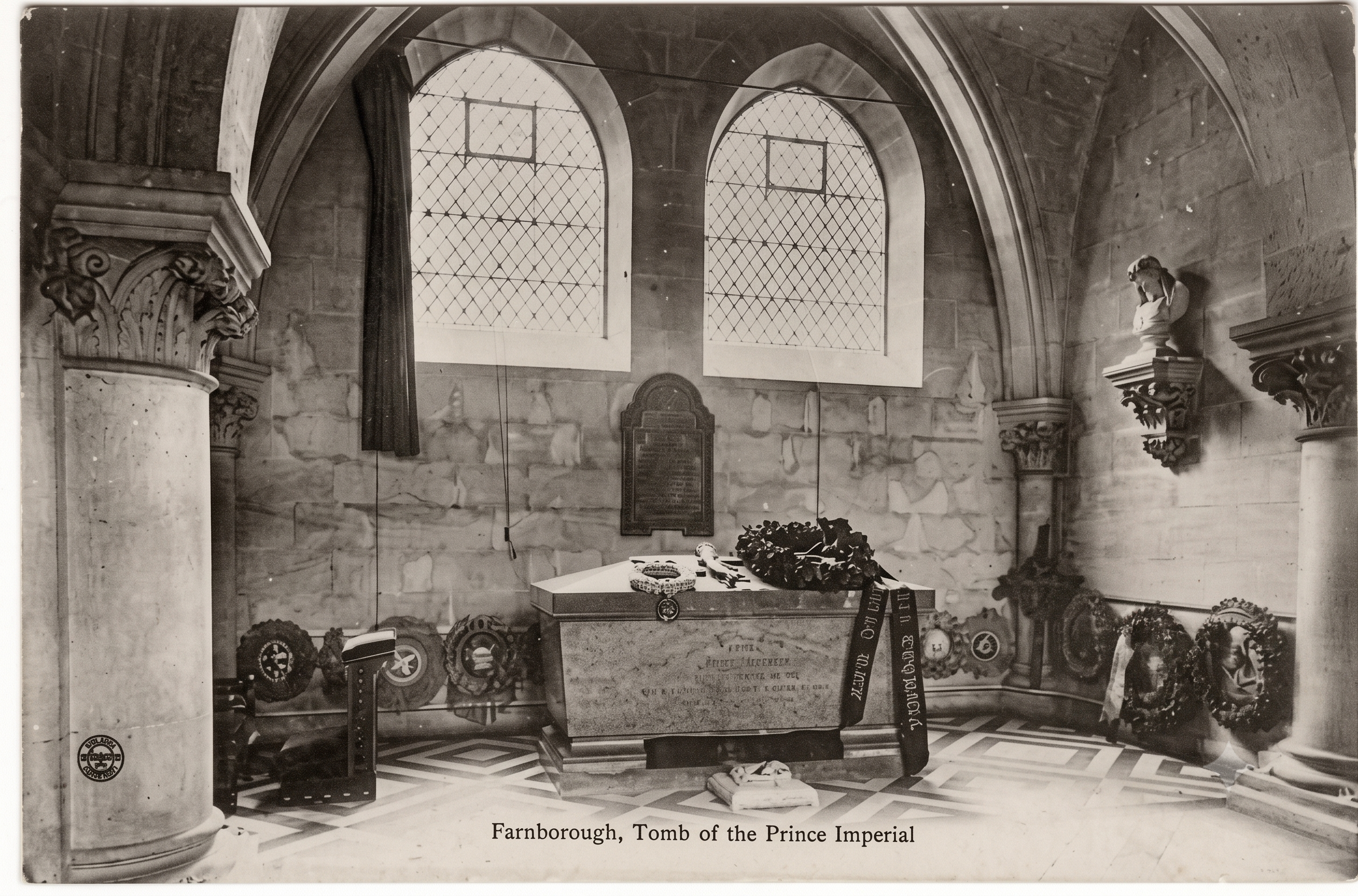
St. Michael’s Abbey in Farnborough, England, stands as a unique beacon of faith and scholarship. Founded in 1880 by Empress Eugénie, wife of Napoleon III, the Abbey carries a rich heritage of prayer, study, and service. Crushed by the loss of her husband in 1873 and the death of her son in 1879, Empress Eugénie built St Michael’s Abbey as a monastery and the Imperial Mausoleum. The arrival of the French Benedictine community in 1895 further enriched the Abbey’s legacy. Napoleon III was one of the first monarchs who recognized our Order. Due to the historical ties between our Order and Napoleon III, we feel a strong connection to St. Michael’s Abbey.
The deep connection our Order feels to St. Michael’s Abbey is heavily rooted in the policies of the Second French Empire. During his reign (1852–1870), Napoleon III understood that a strong alliance with the Catholic Church was vital for national unity and social stability.
After decades of post-revolution turbulence where religious life in France was heavily suppressed or strictly controlled, Napoleon III’s government fostered an environment where Catholic orders could thrive again. He granted official state recognition and legal status to numerous congregations, allowing them to legally own property, build monasteries, and establish extensive networks of schools, orphanages, and hospitals. This era of patronage and protection earned him the lasting gratitude of many religious communities, whose presence and institutional memory at places like St. Michael’s Abbey endure to this day.
Legal status & contact
Focusing on maritime security, the Order holds official legal personality as a recognized religious institution under the laws of the Kingdom of The Netherlands (registration number 42078675), facilitated by a Dutch private foundation (registration number 41185188).
- Visit: Het Pelgrimshys, Grotekerksbuurt 13A, Dordrecht; 1849 Route de Colomars, 06790 Aspremont
- Postal address: Postbus 26, NL-3300 AA Dordrecht
- Email: gp@ordredutemple.fr
History of the Order
The original Order was founded around 1119 in Jerusalem by Hugh de Payens, a nobleman from the Champagne region, with eight companions. They were granted quarters in the Al-Aqsa Mosque (the Temple of Solomon) by King Baldwin II. Following the loss of the Holy Land, the Order fell victim to the political machinations of King Philip IV of France.
Recent historiographical developments have reshaped the understanding of the Order’s termination. In September 2001, Italian paleographer Barbara Frale (b. 1970) discovered the Chinon Parchment in the Vatican Secret Archives (Archivum Arcis Armarium D 218). This document explicitly confirms that in August 1308, Pope Clement V granted absolution to Grand Master Jacques de Molay and other leaders, effectively neutralizing the charges of heresy. A parchment dated 20 August 1308, addressed to Philip IV, stated that absolution had been granted to all Templars who had confessed, restoring them “to the Sacraments and to the unity of the Church.“
The historiography of the Ordre du Temple operates within a unique intersection of medieval history, dynastic law, and 18th-century restauration. Unlike the medieval Pauperum Commilitonum Christi Templique Salomonici, suppressed by the papal bull Vox in excelso in 1312, the modern Ordre du Temple traces a distinct trajectory of public re-emergence and state recognition.
L’ordre du Temple (Order of the Temple, or OT) was made public in France in 1705 by Philippe II, Duke of Orléans. Prior to the 1804 restoration under Bernard-Raymond Fabré-Palaprat, the Order of the Temple developed along two parallel lines: a French branch and a British branch. The French branch consisted of an aristocratic continental leadership network that was cultivated within the French royal court and legitimized through the Larmenius Charter. In contrast, the British branch operated as a Jacobite and Scottish lineage that leveraged chivalric Templar authority for political mobilization in support of the House of Stuart.
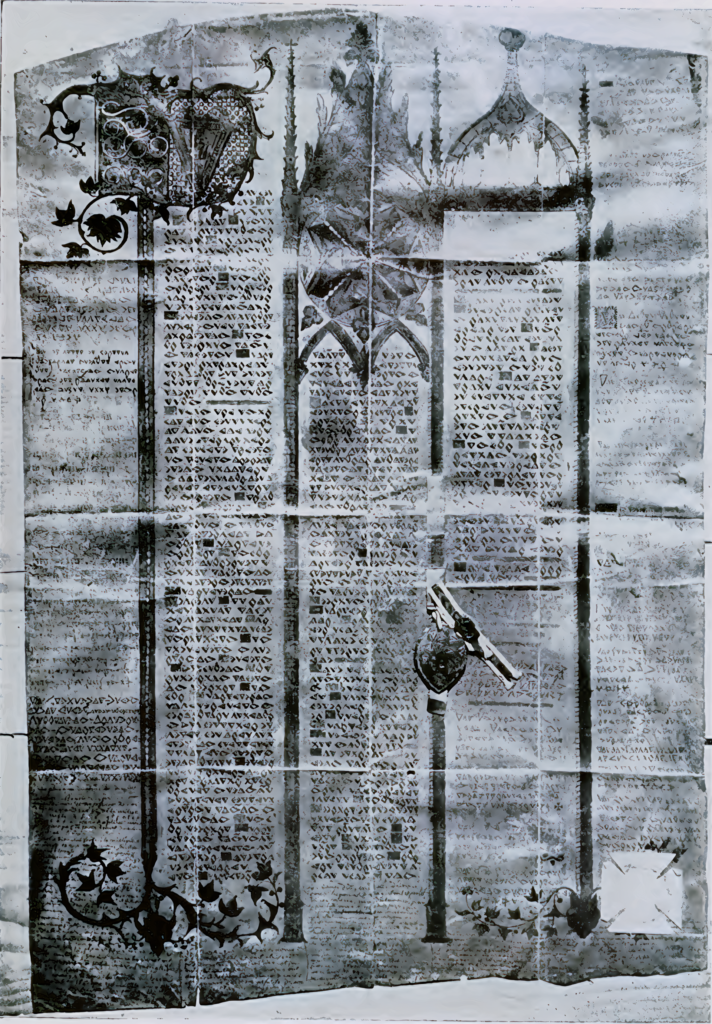
The order was officially reconstituted in 1804 by Dr. Bernard-Raymond Fabré-Palaprat, chevalier of the Legion of Honour, who used the Larmenius Charter (preserved at Mark Masons Hall, London) as evidence of its pedigree. The Larmenius Charter is a coded document detailing the transfer of leadership of the Knights Templar to Jean Marc Larmenius after the death of Jacques de Molay (1248–1314). It lists 22 successive Grand Masters after De Molay, ending in 1804, with Fabré-Palaprat last on the list. Larmenius was a Palestinian-born Christian who joined the Order during the waning years of the Crusades and served as Templar Preceptor on Cyprus. The Charter traces the Order through a dark period until its semi-private unveiling at the Convent General at Versailles in 1705 by Philippe II, Duke of Orléans. Sir George Warner, D.Litt., FBA, FSA (1845–1936), Keeper of Manuscripts and Egerton Librarian at the British Museum, determined the Latin to be of the fourteenth century, consistent with the Charter’s claims, and the illumination to date from the second part of the fifteenth century (Moseley Brown, W. (2003) [1944], “Theories of Masonic Templar Origins,” Highlights of Templar History, The Book Tree, p. 54, ISBN 9781585092307; Clausen, D.J. (2021) Succession 1307–1804: Re-Examining the Larmenius Charter).
Research question: To what extent can the modern Ordre du Temple claim a verifiable institutional and dynastic continuity with its medieval and Enlightenment predecessors through the mechanisms of political patronage and the hereditary transmission of the Stuart legacy?
Continuity: 1314–1705
The statutes of 1596–1695
The traditional narrative often leaps from the execution of Jacques de Molay in 1314 directly to the Regency of Philippe II, Duke of Orléans, in 1705. Recent archival research, however, has challenged this “gap” theory. Investigations into the French National Archives have revealed catalog entries for Statutes of the Order of the Temple dating to 1596, 1693, and 1695. Although the physical documents are missing, their catalogue presence suggests a structured continuity well before the 1705 “revival” — likely under the Duke of Duras (1625–1704), whose signature appears on the Order’s Charter of Transmission during the period of the “Petite Résurrection des Templiers” (see Clausen, Daniel J. Templar Succession: Establishing Continuity 1307–Present, 2021).
Biographical focus
Jacques de Molay (c. 1244–1314)
The foundational martyr of the Order’s lineage. Born between 1244 and 1250 in Molay, Haute-Saône, he entered the Order at the Commandery of Beaune in 1265. As the 23rd Grand Master, he refused to merge the Templars with the Hospitallers. His execution by burning on the Île des Juifs in Paris on 18 March 1314 was an act of royal vengeance by Philip IV.
Biographical focus
Johannes Marcus Larmenius (c. 1260s–c. 1324)
According to the Order’s internal history, Larmenius was a Palestinian-born Christian who became Templar Preceptor on Cyprus. Following the arrest of de Molay, he purportedly maintained the clandestine structure of the Order. In February 1324 he drafted the Carta Transmissionis (Larmenius Charter) to transfer the Grand Mastership to Franciscus Theobaldus of Alexandria.
The legitimacy of the post-1314 Order rests on the Carta Transmissionis, or Larmenius Charter (preserved at Mark Masons Hall, London). This coded Latin document details the transfer of the Grand Mastership from De Molay to Larmenius in 1314 and lists 22 successors ending in 1804 (Clausen, Daniel J., The Charter of Larmenius and the Avignon Decree of 1326, Academia.edu, 2021).
Sir George Frederic Warner (1845–1936), Keeper of Manuscripts at the British Museum and Fellow of the British Academy, examined the original document. He determined the Latin script to be of the 14th century and the illumination to date from the mid-15th century. This expert analysis contradicts 19th-century by freemasons who claims that the Charter was a forgery created for the 1804 revival (Moseley Brown, W. (2003) [1944], “Theories of Masonic Templar Origins,” Highlights of Templar History, The Book Tree, p. 54, ISBN 9781585092307; Clausen, D.J. (2021) Succession 1307–1804: Re-Examining the Larmenius Charter).
I, Brother John Mark Larmenius, of Jerusalem, by the grace of God and the secret decree of the most venerable and holy martyr, the Grand Master of the Soldiery of the temple, to whom be all honor and glory, confirmed by the common council or the Brethren, being endowed with the Supreme Grand Mastership of the whole Order of the Temple, to everyone who shall see these Letters Decretal thrice greeting:
Translation of the Larmenius Charter (preserved at Mark Masons Hall, London).
Be it known to all, both present and to come, that the failure of my strength, on amount of extreme age, my poverty, and the weight of government being well considered I, the aforesaid humble Master of the Soldiery of the temple, have determined, for the greater glory of God and the protection and safety of the Order, the Brethren, and the statutes, to resign the Grand Mastership into stronger hands.
On which account, God helping, and with the consent of a Supreme Convention of Knights, I have conferred and by the present decree do confer, for life, the authority and prerogatives of Grand Master of the Order of the Temple upon the Eminent Commander and very dear Brother, Francis Thomas Theobald Alexandrinus, with the power, according to time and circumstances, of conferring the Grand Mastership of the Order of the Temple and the supreme authority upon another Brother, most eminent for the nobility of his education and talent and decorum of his manners: which is done for the purpose of maintaining a perpetual succession of Grand Masters, an uninterrupted series of successors, and the integrity of the statutes. Nevertheless, I command that the Grand Mastership shall not be transmitted without the consent of a General Convention of the fellow-soldiers of the Temples as often as that Supreme Convention desires to be convened, and, matters being thus conducted, the successor shall be elected at the pleasure of the knights.
But, lest the powers of the supreme office should fall into decay, now and for ever let there be four Vicars of the Grand Master, possessing Supreme power, eminence, and authority over the whole Order, With the reservation of the rights of the Grand Master, which Vicars of the (Grand Masters shall be chosen from among the alders, according to the order of their profession. Which is decreed in according with the above-mentioned wish, commended to me and to the Brethren by our most venerable and most blessed Master, the martyr, to whom be honor and glory. Amen.
Finally, on consequence of a decree of a Supreme Convention of the Brethren, and by the supreme authority to me committed, I will, declare, and command that the Scottish exemplars, as deserters from the Order, are to be accursed, and that they and the brethren of Saint John of Jerusalem, upon whom may God have mercy, as spoliators of the domains of our soldiery are now and hereafter to be considered as beyond the pale of the Temple I have therefore established signs, unknown to our false Brethren, and not to be known by them, to be orally communicated to our fellow-soldiers, and in which way I have already been pleased to communicate them in the Supreme Convention.
But these signs are only to be made known after due profession and knightly consecrations according to the Statutes, Rites, and Usages of the fellow-soldiery of the Temple, transmitted by me to the above-named Eminent Commander as they there delivered into my hands by the venerable and most holy martyr, our Grand Master, to whom be honor and glory. Let it be done as I have said. So mote it be. Amen.
And then follow the acceptances and signatures of twenty-two succeeding Grand Masters-the last, Bernard Raymund Fabre, under the date of 1804.
The regency revival & the statutes of 1705
Biographical focus
Jacques-Henri de Durfort, Duke of Duras (1625–1704)
Jacques-Henri de Durfort, 1st Duke of Duras and Marshal of France, anchors the Order’s continuity in the late 17th century. Born in 1625, he was a distinguished military commander under Louis XIV. His family acquired the fief of Duras in the 14th century through marriage to the niece of Pope Clement V — the pontiff who suppressed the Templars — a historical irony that placed the “custody” of the Order in the family of its suppressor. His tenure as Grand Master (1681–1704) aligns with the “missing statutes” of 1695.
Biographical focus
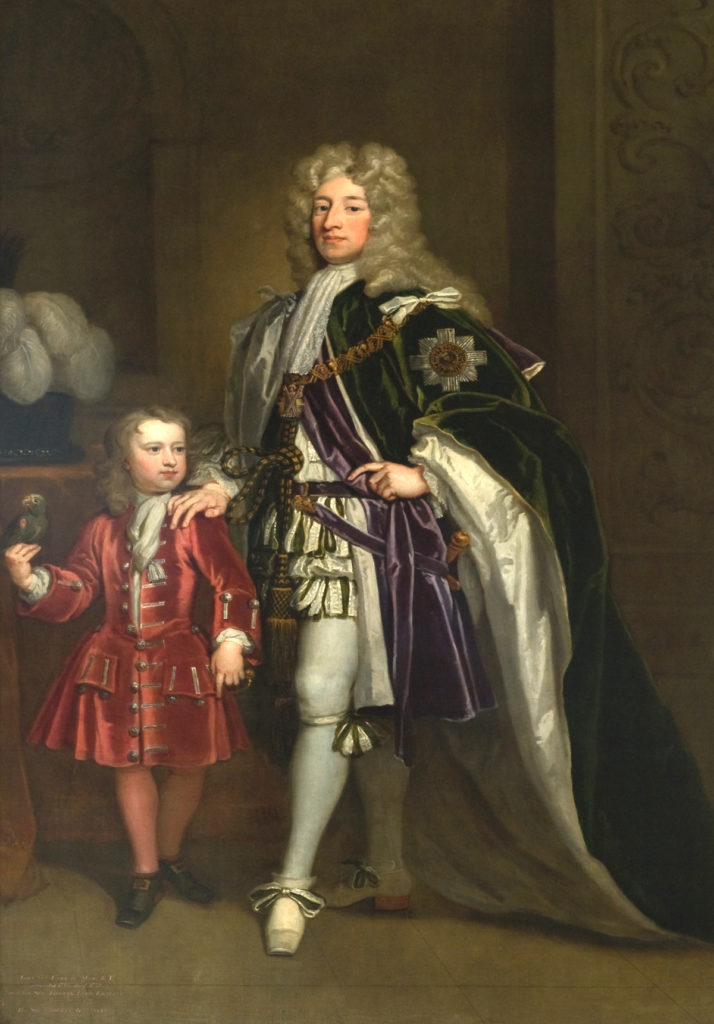
Philippe II, Duke of Orléans (1674–1723)
In 1705 the Order was “made public” in France under Philippe II, Duke of Orléans, the future Regent of France. Born in 1674, Philippe was the nephew of Louis XIV. He inherited the legacy of the Counts of Champagne, the family instrumental in the Order’s original formation. Under his Grand Mastership, the Convent General of Versailles enacted the Statuts des chevaliers de l’ordre du Temple, transforming the Order from a monastic fraternity into a secular order of chivalry.
Following the Duke of Orléans, the Grand Mastership remained firmly within the highest echelons of the French royal bloodline. This golden era of the French aristocratic Ordre du Temple came to a violent and abrupt halt with the outbreak of the French Revolution.
Following Cossé-Brissac’s murder, Claude M. R. Chevillon nominally held the title of Grand Master from 1792 until 1804, guiding the remnants of the fraternity through the darkest days of the Reign of Terror. During this perilous interregnum, the physical archives of the Order, including the sacred Larmenius Charter and the Statutes of 1705, were secretly safeguarded.
| Period | Grand master | Historical context and notes |
|---|---|---|
| 1705–1724 | Philippe II, Duke of Orléans | Regent of France. Brought the Order out of complete secrecy and instituted the 1705 Statutes. |
| 1724–1737 | Louis Augustus Bourbon | Duke of Maine; continues the tradition of royal Princes of the Blood holding the Grand Mastership. |
| 1737–1741 | Louis Henry Bourbon Condé | Duke of Bourbon; maintained the aristocratic prestige of the Order. |
| 1741–1776 | Louis Francis Bourbon Conti | Prince of Conti; oversaw the Order during the height of the French Enlightenment. |
| 1776–1792 | Louis Hercule Timoléon de Cossé-Brissac | Duke of Brissac. Massacred during the French Revolution, leading to the temporary dissolution of the Order. |
| 1792–1804 | Claude-Mathieu Radix de Chevillon (often cited as Claude M. R. Chevillon) | Nominally led the neo-Templar movement as a leader or caretaker from 1792 until 1804. He helped preserve and transition the tradition of the Order of the Temple before Dr. Bernard Raymond Fabre-Palaprat took over as Grand Master in 1804 |
The Jacobite intersection and Ramsay’s influence
Parallel to the aforementioned aristocratic French line and eventual tragedy of the Continental succession ran a separate, fiercely militant, and highly secretive lineage: the Jacobite (or Scottish) Knights Templar. While the French line sought prestige and social exclusivity, the Jacobite line sought revolution. Following the deposition of the Catholic King James II of England (James VII of Scotland) in the Glorious Revolution of 1688, loyalists to the House of Stuart – the Jacobites – were forced into exile across the continent or into underground opposition against the new Hanoverian regime in Great Britain. The 18th-century evolution of the Order was heavily influenced by the Jacobite cause.
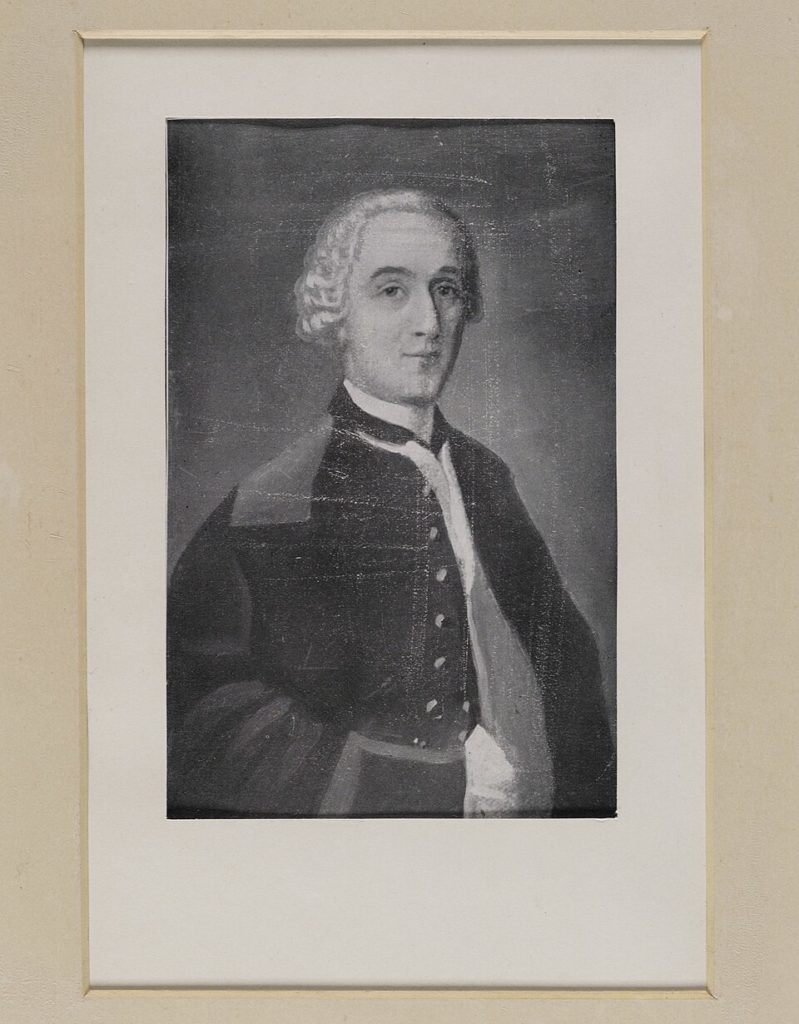
An important personality in the revival of British Templar history was Sir Andrew Michael Ramsay Bt FRS. Leaving England for Holland in 1709, he soon moved to Cambrai, France.
In December 1737, when Charles Radcliffe, Jacobite 5th Earl of Derwentwater, was elected Grand Master of the Jacobite lodge in Paris, he worked with Ramsay to transform the Jacobite lodges into an order of chivalry. Derwentwater’s new office was celebrated by Ramsay in an oration that recounted the medieval chivalric origins and mystical-Jewish themes of Écossais Masonry.
Among Prince Charles Edward Stuart‘s seven companions on his perilous journey to Scotland in 1745 was George Kelly, whom Ramsay had chosen to translate his Masonic oration for English publication. Privy to Ramsay’s most mystical and chivalric Masonic beliefs, Kelly became one of Charles Edward’s closest advisers. After the Prince’s triumphant arrival in Edinburgh, he participated in a Masonic ceremony in Holyrood Palace.
On 30 September 1745, the Duke of Perth wrote Lord Ogilvy of “a solemn chapter of the ancient order of chivalry of the Temple of Jerusalem,” when only “ten knights were present, for since my Lord Mar demitted the office of G Master, no general meeting has been called, save in your own North Convent.” The Prince “looked most gallantly in the white robe of the order, took his profession like a worthy knight, and … did vow that he would restore the Temple higher than it was in the days of William the Lyon.” Then “Lord Athol did demit as Regent, and his Rl Highness was elected G Master. I write you knowing how you love the order” (Le Monde Maçonnique des Lumières, eds. Charles Porset and Cécile Révauger. Paris: Honoré Champion, 2013).
Biographical focus
Sir Andrew Michael Ramsay (1686–1743)
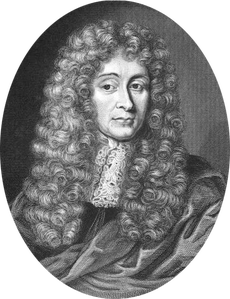
Born in Ayr, Scotland, in 1686, Ramsay was the son of a baker. Raised a Calvinist, he left England for Holland in 1709, then moved to Cambrai, France, where he was converted to Catholicism by the mystic Archbishop François de Salignac de la Mothe-Fénelon (1651–1715). Ramsay later served as secretary to Madame Guyon (1648–1717), a co-founder of Quietism. In Paris he was admitted to the Order of St. Lazarus by the Duke of Orléans. In 1723 the “Old Pretender” (James III) granted him a certificate of nobility. Ramsay’s famous 1737 Oration linked the Freemasons to the “Crusader Knights,” providing the intellectual bridge between the Jacobite diaspora and Templar revivalism.
Biographical focus
Charles Radcliffe, 5th Earl of Derwentwater (1693–1746)
In December 1737, Charles Radcliffe, the Jacobite 5th Earl of Derwentwater, was elected Grand Master of the Jacobite lodge in Paris. Born in 1693, Radcliffe was an ardent Jacobite who had escaped from Newgate Prison in 1716. He worked with Ramsay to transform the Jacobite lodges into an order of chivalry. He was captured during the 1745 rising and beheaded at Tower Hill in 1746.
The Holyrood chapter (1745)

The operational fusion of the Order and the Jacobite cause occurred during the Rising of 1745. George Kelly (c. 1680–1762), an Irish clergyman and one of the Seven Men of Moidart — the seven followers who accompanied Charles Edward Stuart at the start of his 1745 attempt to reclaim the thrones of Great Britain and Ireland for the House of Stuart — was a close advisor to Prince Charles Edward Stuart. Kelly had been chosen by Ramsay to translate his Oration for English publication.
On 30 September 1745, the Duke of Perth (James Drummond, 1713–1746) wrote to Lord Ogilvy (David Ogilvy, 1725–1803) regarding a “solemn chapter of the ancient order of chivalry of the Temple of Jerusalem” held at Holyrood Palace. Only ten knights were present because, “since my Lord Mar (John Erskine, 1675–1732) demitted the office of Grand Master, no general meeting has been called.”
At this meeting, Prince Charles Edward Stuart (“Bonnie Prince Charlie”) “looked most gallantly in the white robe of the order… and did vow that he would restore the Temple higher than it was in the days of William the Lyon.” Lord Atholl (William Murray, 1689–1746) then demitted as Regent, and the Prince was elected Grand Master.
| Name | Role | Key details and timeline |
|---|---|---|
| John Graham of Claverhouse (“Bonnie Dundee”) | Early Grand Master | Legend claims his body was found wearing the Grand Cross of the Order after he was killed in 1689. |
| John Erskine, Earl of Mar | Grandmaster | Formalized the chivalric network and built intelligence channels using Masonic contacts; eventually demitted the office (lived 1675-1732). |
| Charles Radcliffe, 5th Earl of Derwentwater | Grand Master (Paris lodge) | Elected in December 1737; collaborated with Sir Andrew Michael Ramsay to elevate the lodges into a ritualized order of chivalry. |
| Lord Athol (William Murray) | Regent of the Order | Held the position following Erskine’s demission; formally stepped down on 30 September 1745 (lived 1689-1746). |
| Prince Charles Edward Stuart (“Bonnie Prince Charlie”) | Grand Master | Elected during a solemn chapter at Holyrood Palace on 30 September 1745; drafted a patent in 1783 transferring the succession. |
| King Gustaf III of Sweden | Grand Master (Successor) | Named successor by Prince Charles in 1783, effectively subsuming the Scottish branch into the Swedish state apparatus. He fully integrated the Scottish and Templar high-degree tradition into the Swedish Masonic Rite (Svenska Systemet), restructuring the system to serve both ideological and royal interests. |
The congress of Wilhelmsbad (1782)
The Jacobite–Templar synthesis influenced Freemasonry until the Congress of Wilhelmsbad in 1782. Chaired by Ferdinand, Duke of Brunswick, the congress concluded that Freemasonry was not the successor to the Knights Templar, causing many Masonic Templar degrees to fade, while the non-Masonic Ordre du Temple continued its distinct lineage (Heckethorn, Charles William, The Secret Societies of All Ages and Countries, Vol. 2, George Redway, 1897).
The Imperial restoration (1804–1870)
Biographical focus
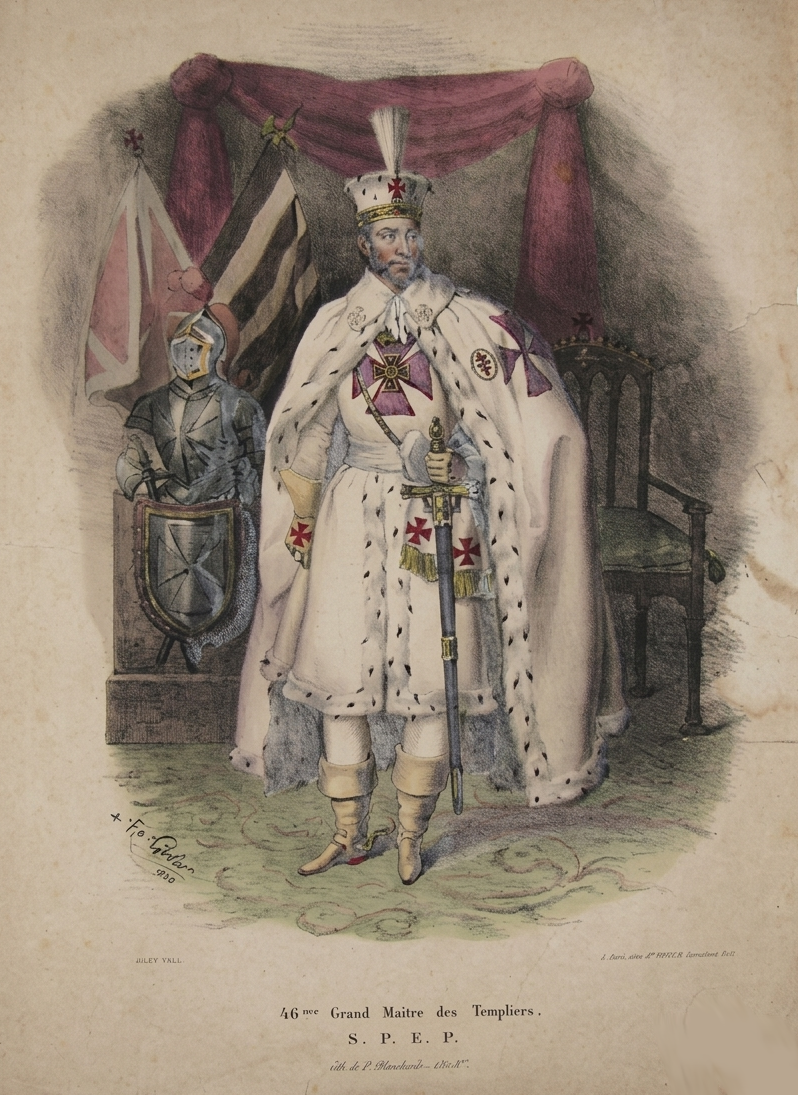
A Paris, chez A.le Didion, Quai Conti No.5. [n.d., 1833].
Bernard-Raymond Fabré-Palaprat (1773–1838)
The Order was officially reconstituted in 1804 by Dr. Bernard-Raymond Fabré-Palaprat. Born in 1773 in Cordes-sur-Ciel, he was the son of a surgeon and originally ordained a priest before becoming a physician. A Chevalier of the Legion of Honour, he received the July Medal for his actions during the 1830 Revolution and served as Grand Master until his death in 1838 (see Deprouw, Stéphanie, “Un héritage des Bonaparte : Le prix du galvanisme (1802–1815) et le prix Volta (1852–1888),” École nationale des chartes, 2008).
Biographical focus
Philippe Ledru (1754–1832)
Fabré-Palaprat founded the Order with Philippe Ledru, son of the physician to the Duke of Cossé-Brissac (the last Grand Master before the Revolution). Ledru claimed to have acquired the Larmenius Charter from the Duke’s furniture, providing the physical link to the pre-1792 Order (see Jean-Pierre Chantin, “Fabré-Palaprat Bernard-Raymond,” Dictionnaire du monde religieux dans la France contemporaine, p. 90, Éditions Beauchesne, 2001).
Imperial recognition in France
Emperor Napoleon I approved the Order in 1811 (Ordre du Temple, anniversaire du martyre, 1er avril 1832) and authorized a solemn ceremony in 1808 to honour Jacques de Molay. Later, Emperor Napoleon III granted the Order recognition as a Sovereign Power by Imperial Decree on 13 June 1853.
The 20th century: Martinist connection & preservation
The Martinist interlude (1894–1932)

Following the decline of the French Regency under Dr. A.G.M. Vernois (who deposited the archives in the National Archives in 1871) and Joséphin Péladan (Regent 1892–1894), the administration of the Order transferred to Belgium. From 1894 it was managed by the Secretariat International des Templiers within the Martinist lodge KvMRiS (KUMRIS) in Brussels (a branch of the Groupe indépendant d’études ésotériques de Paris). Key figures included Francis Vurgey, Nicolas Brossel, and Le Clément de Saint-Marcq (Van Arenbergh, Emile, “Le Clément de Saint-Marcq, Philippe-Auguste-Joseph,” Biographie Nationale, vol. 11, Emile Bruylant, 1890, p. 577).
1932 registration and the war years
On 19 January 1932, the Order was registered in Brussels as the Ordre Souverain et Militaire du Temple de Jérusalem (OSMTJ). The recording members were Joseph Cleeremans, Gustave Jonckbloedt, and Théodore Covias (who served as Regent in 1935).
Biographical focus
Emile-Isaac Vandenberg (1895–1943)
Emile Clément Joseph Isaac Vandenberg succeeded Covias as Regent. Born in Mechelen in 1895, he was a furniture manufacturer of Jewish descent (using his wife’s surname, Vandenberg, for protection). To save the Order during the Nazi occupation, he issued a decree in 1942 transferring the archives and Grand Mastership to the neutral Grand Prior of Portugal. He died in a suspicious car accident near Antwerp in 1943, widely believed to be an assassination by the Gestapo.
Biographical focus
Dom Antonio Campelo Pinto de Sousa Fontes (1878–1960)
The recipient of the archives was Dom Antonio Campelo Pinto de Sousa Fontes, Grand Prior of Portugal. After the war he assumed the title of Prince Regent and Grand Master. Upon his death in 1960 he was succeeded by his son, Dom Fernando Pinto Pereira de Sousa Fontes (1929–2018). Antonio Sousa Fontes became the new “grand master” after Vandenberg’s death.
Biographical focus
Anton O.E. Leuprecht-Rapp
In 1937, Anton O.E. Leuprecht-Rapp, a Swiss national living in Geneva, was admitted to the Order. He was also Grand Master of the Grand Orient Maçonnique Martiniste Suisse. Dom Antonio granted him permission to establish autonomous Grand Priories, leading to the formation of the independent Grand Priory of Switzerland. He is noted in the Batchinsky Collection of the Carleton University Library for involvement in international arms deals in 1949.
References
Primary sources
Chinon Parchment (1308). Vatican Secret Archives.
Larmenius, J. M. (1324). Carta Transmissionis. Mark Masons Hall, London.
Statuts des chevaliers de l’ordre du Temple (1705).
Ramsay, A. M. (1737). Oration.
Secondary literature
Clausen, D. J. (2021). Succession 1307–1804: Re-Examining the Larmenius Charter.
Clausen, D. J. (2021). Verifying the Continuation of the French Ordre du Temple and the OSMTJ.
Frale, B. (2004). “The Chinon chart – Papal absolution to the last Templar.” Journal of Medieval History.
Roggemans, M. (2010). Geschiedenis van de occulte en mystieke broederschappen.
Warner, G. F. (n.d.). Authentication of the Larmenius Charter. British Museum.
Research findings
The diachronic analysis supports the thesis that the Ordre du Temple maintained a form of “dynastic continuity” bridging the apparent historical gaps between 1314, 1705, and the modern era. This survival was achieved not through a seamless public bureaucracy, but through the mechanism of proprietary patronage.
- Dynastic preservation: the “gap” years were bridged by families such as the Durfort-Duras, whose link to Clement V allowed the Order to persist as a semi-private aristocratic sodality.
- The Stuart legitimacy: the legitimacy of the current Grand Priory resolves the tension between the Order’s Jacobite origins and its modern existence. By tracing the lineage through the Earls of Dunbar – confirmed by the Stuart monarch Charles II – the Order secured a transnational legal personality that transcends later political upheavals.
- Institutional distinctiveness: unlike Masonic bodies, the Ordre du Temple consistently operated under a distinct charter (Larmenius) and royal (Stuart) and imperial recognition (Napoleon I, Napoleon III). The modern leadership, anchored in the Dunbar lineage and operating through valid legal structures, validates the Order’s claim to be a historical institution adapted to the modern world.